Discover how digital marketing solutions help businesses increase brand visibility, attract qualified leads, and drive sustainable growth. From SEO and content marketing to PPC, social media, and analytics, the right strategy improves customer engagement, boosts conversions, and maximizes ROI across every digital channel.
For twenty years, marketers built entire careers around one goal: rank on page one of Google. That game just changed its rules without warning anyone. Today, a customer searching for “best hospital for cardiac care” or “top ERP software for manufacturers” often gets a complete answer before they ever see a blue link and your brand is either named in that answer or it doesn’t exist.
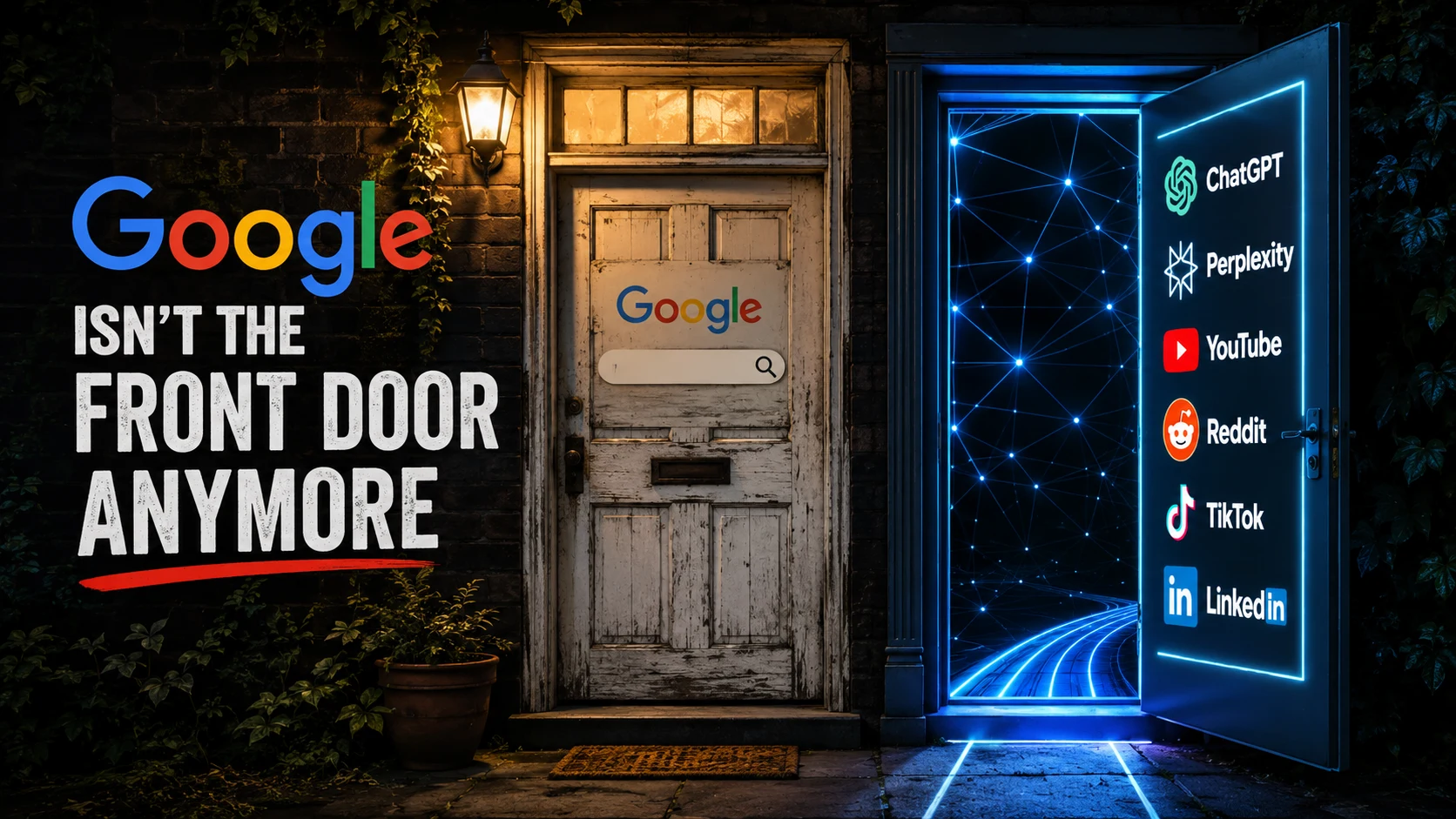
Consequently, the front door to your business has moved. It’s no longer a search results page you optimize for clicks. It’s an AI-generated answer you either earn a place inside, or get erased from entirely. Here’s what every CMO needs to understand and do right now.
The Data Doesn’t Lie: Clicks Are Disappearing
The numbers are stark, and they’re accelerating faster than most executives realize. Recent research shows that 68% of U.S. Google searches now end without a single click to any website, up from roughly 45% just a decade ago. When an AI Overview appears on the results page, that zero-click rate jumps to 83%. In Google’s newer AI Mode, it climbs even higher, to 93%.
Perhaps the most sobering statistic: Pew Research found that only about 1% of users click a cited source link when an AI Overview answers their question. The answer satisfies them right there. Your website never gets the visit.
Meanwhile, the shift isn’t limited to Google. ChatGPT, Perplexity, and Gemini now resolve entire categories of informational intent conversationally, without a search engine results page involved at all. Therefore, treating “SEO” and “AI visibility” as the same discipline is a mistake that’s already costing brands market share.
Here’s the silver lining: brands cited inside AI Overviews earn 35% more organic clicks and 91% more paid clicks than brands left out of the same answer, according to Seer Interactive. Visibility inside the answer still drives business — it just requires a different playbook.
Digital Marketing Solutions for Sustainable Business Success
Digital marketing solutions empower businesses to build a strong online presence, attract qualified prospects, and achieve sustainable growth. By combining SEO, content marketing, paid advertising, social media, email marketing, and analytics, businesses can reach the right audience at the right time. Moreover, a data-driven strategy improves brand visibility, increases customer engagement, and maximizes return on investment. As a result, organizations can generate consistent leads, strengthen customer relationships, and achieve long-term business success.
Why Every Industry on Your Team’s Radar Should Care
This shift touches every sector, but the stakes and mechanics differ by industry:
- Healthcare:Patients ask AI tools symptom and provider questions before ever calling a clinic. Trust and E-E-A-T signals now decide who gets recommended.
- Finance: Compliance-heavy answers about loans, rates, and insurance are increasingly synthesized by AI accuracy and authority determine citation.
- Manufacturing & IT: Long, technical buying research (spec comparisons, integration questions) is exactly the query type AI Overviews target most aggressively.
- Real estate & Automobile: High-consideration purchases still need a click eventually, but AI now shapes the shortlist before a buyer ever visits a dealership or open house.
- Education, Ecommerce, Hospitality: Discovery-stage queries (“best university for X,” “best hotel in Y”) are being answered conversationally, ahead of any list of links.
Specifically, industries with heavy informational, research-driven buying journeys are being hit hardest and fastest.
From SEO to GEO: The New Playbook
Search Engine Optimization isn’t dead, but it’s no longer sufficient on its own. Generative Engine Optimization (GEO) the discipline of earning citations inside AI-generated answers — is now a board-level priority. Here’s how leading CMOs are adapting:
- Publish for citation, not just clicks
AI engines pull from clear, well-structured, fact-dense content. Short declarative answers near the top of a page, backed by data, get quoted more often than long narrative prose.
- Build topical authority everywhere AI looks
AI answers draw from your website, yes, but also YouTube, Reddit, LinkedIn, and third-party review sites. Therefore, a single polished landing page is no longer enough — your brand’s footprint across the open web now feeds the answer.
- Update content on a real cadence
AI engines favor freshness. Stale pages fall out of rotation quickly. Quarterly content refreshes should become a standing operational rhythm, not an afterthought.
- Track citations, not just rankings
Google Search Console and rank trackers no longer tell the full story. New tools now monitor whether your brand is actually named inside AI Overviews, ChatGPT responses, and Perplexity answers — track that number as closely as you once tracked position one.
- Protect high-intent, transactional queries
Not everything is zero-click. Local searches, branded searches, and bottom-funnel transactional queries still convert clicks reliably. Don’t abandon conversion-focused SEO — just stop expecting it to carry your entire top-of-funnel strategy.
Measuring Success in a Clickless World
This is where most marketing organizations stumble: they keep measuring old metrics in a new environment. Sessions and bounce rate can look fine even while your actual market visibility collapses, because impressions inside an AI answer never register as a “visit” in Google Analytics.
Instead, forward-thinking CMOs are now tracking:
- Citation frequency — how often your brand is named inside AI-generated answers
- Branded search lift — whether AI exposure drives people to search your company name directly afterward
- Share of AI voice — your citation rate versus named competitors on the same query set
Furthermore, the clicks that do survive the zero-click era convert meaningfully better, because those visitors already arrive informed and further along the funnel. Quality is replacing quantity as the metric that matters.
The Call to Action: Rebuild Your Front Door Now
Google isn’t disappearing, but it has stopped being the only, or even the primary, front door to your brand. The organizations winning in 2026 are the ones treating AI answer visibility as seriously as they once treated page-one rankings.
Start this week: audit which of your priority queries already trigger AI Overviews or AI Mode responses. Check whether your brand appears and if a competitor appears instead. That gap is your new opportunity.
The front door has moved. The only question left is whether your brand walks through it, or gets left standing outside.
Frequently Asked Questions
- What does “Google isn’t the front door anymore” actually mean?
It means the first thing a customer sees is often an AI-generated answer, not a page of blue links. If your brand is named inside that answer, you’re in the conversation; if it isn’t, you’re effectively invisible to that customer even if you’d rank #1 in classic search.
- How big is the shift toward zero-click searches?
Roughly 68% of U.S. Google searches now end without a click to any website, up from about 45% a decade ago. That number jumps to 83% when an AI Overview appears, and climbs to 93% in Google’s AI Mode.
- If an AI Overview answers the question, does anyone still click the source links?
Rarely. Pew Research found that only about 1% of users click a cited source link when an AI Overview answers their question the AI’s answer satisfies them on the spot, so your website never gets the visit.
- Is this just a Google problem?
No. ChatGPT, Perplexity, and Gemini are resolving entire categories of informational questions conversationally, with no search results page involved at all. That’s why treating “SEO” and “AI visibility” as the same discipline is a mistake they’re becoming two different games.
- Is there any upside to being cited inside an AI answer?
Yes. According to Seer Interactive, brands cited inside AI Overviews earn 35% more organic clicks and 91% more paid clicks than brands left out of the same answer. Being named in the answer still drives real business — it just requires a different playbook to get there.
- Which industries should be paying the most attention to this?
Any industry with a heavy, informational, research-driven buying journey is being hit hardest and fastest. That includes healthcare (symptom and provider questions), finance (loans, rates, insurance), manufacturing and IT (technical spec and integration research), real estate and automobile (shortlisting before a visit), and education, ecommerce, and hospitality (discovery-stage “best of” queries).
- What is GEO, and how is it different from SEO?
GEO stands for Generative Engine Optimization the discipline of earning citations inside AI-generated answers, as opposed to earning rankings on a search results page. SEO isn’t dead, but it’s no longer sufficient on its own; GEO is now considered a board-level priority alongside it.
- What should CMOs actually do differently to win citations?
Five things stand out: publish clear, fact-dense content built for citation rather than long narrative prose; build topical authority across the whole web (YouTube, Reddit, LinkedIn, review sites), not just your own site; refresh content on a real quarterly cadence since AI engines favor freshness; track whether you’re actually named inside AI answers, not just your search rankings; and keep protecting high-intent, transactional, and local queries, which still convert on clicks.
- Should we abandon traditional SEO metrics like sessions and rankings?
Not entirely, but don’t rely on them alone. Sessions and bounce rate can look perfectly fine even as your real market visibility collapses, because an AI Overview impression never registers as a “visit” in Google Analytics. Rank trackers and Google Search Console no longer tell the full story either.
- What new metrics should marketing teams be tracking instead?
Three matter most: citation frequency (how often your brand is named inside AI-generated answers), branded search lift (whether AI exposure drives people to search your company name afterward), and share of AI voice (your citation rate versus named competitors on the same queries).
- Do the clicks that still happen convert better or worse than before?
Better. Visitors who click through after seeing an AI answer arrive already informed and further along the funnel, so those surviving clicks tend to convert more meaningfully. Quality is replacing quantity as the metric that matters.
- What’s the first step a marketing team should take this week?
Audit your priority queries to see which ones already trigger AI Overviews or AI Mode responses, then check whether your brand appears in those answers — or whether a competitor appears instead. That gap between where you show up and where you don’t is your next opportunity.