The goal of this blog is to highlight the importance of chatbots in digital marketing—their benefits, uses, and how they help businesses boost customer engagement, sales, and SEO performance.
A chatbot is an online assistant that interacts with users in real time. You’ve likely seen one on a website or shopping app where a chat box pops up asking, “How can I help you?” Unlike human agents, chatbots don’t wait for availability. They deliver instant responses, answer common questions, and guide customers to the products or services they need.
In digital marketing, chatbots are invaluable. Businesses want to reach customers quickly and ensure satisfaction, and chatbots make this possible with 24/7 availability. They provide product details, share offers, recommend items, and even capture customer data. This not only saves time for businesses but also creates a seamless, hassle-free experience for customers.
“Did you know? By the end of this year, over 80% of businesses are expected to use chatbots to boost conversions and reduce customer support costs.”
Personalization is one of the biggest advantages of chatbots. They can remember customer preferences and make tailored suggestions, making users feel valued and often driving additional sales.
In this blog, we’ll explore the importance of chatbots in digital marketing and how they help businesses build stronger relationships, improve customer service, and grow their online presence.
Key Takeaways:
- Chatbots provide 24/7 support, instant responses, and personalized customer experiences.
- They reduce costs, increase engagement, and boost satisfaction by managing multiple conversations simultaneously.
- AI-powered chatbots go beyond simple replies by understanding user intent, recommending products, and supporting sales.
- Chatbots enhance SEO by lowering bounce rates, keeping users engaged, and guiding them to more content.
What are Chatbots and Why They Matter in Marketing?
A chatbot in digital marketing is a software program designed to interact with people. Some follow simple rules with fixed responses, while AI-powered chatbots understand natural language and reply intelligently.
Chatbots are valuable in marketing because they keep businesses connected with customers around the clock. Whether a visitor has questions at midnight on a website or inquiries about a product on social media, chatbots provide instant responses. This speed and availability enhance professionalism and build trust.
Cost efficiency is another key benefit. Hiring staff to answer questions 24/7 is expensive, but chatbots can handle thousands of queries at once without additional cost, making them a smart investment for both small and large businesses.
The Role of Chatbots in Digital Marketing
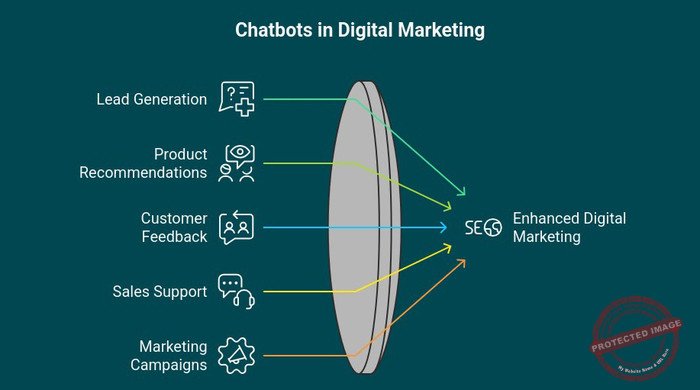
The role of chatbots in digital marketing goes far beyond customer support. Today, they’re being used in many innovative ways:
- Lead Generation: Chatbots engage visitors with simple questions to collect names, emails, and preferences.
- Product Recommendations: By tracking user behavior, chatbots suggest the right products at the right time.
- Customer Feedback: They make it easy for businesses to gather feedback and improve services.
- Sales Support: Chatbots guide customers step by step through the buying process, making purchases seamless.
- Marketing Campaigns: They can share discounts, promotions, and reminders directly through the chat box.
AI Chatbot in Digital Marketing
AI has made chatbots smarter than ever. Unlike basic bots with pre-written replies, AI-powered chatbots understand natural language, learn from past interactions, and deliver more accurate responses.
For instance, if a customer says, “I need a laptop for work and gaming,” an AI chatbot can refine results, highlight best-sellers, and suggest accessories—mimicking the experience of speaking with a real assistant.
Today, chatbots are more than Q&A tools. With AI, they actively drive customer engagement and sales.
Chatbot Digital Marketing: Real Business Benefits
In chatbot digital marketing, businesses use chatbots to enhance online promotion and customer engagement. The benefits include:
- 24/7 Availability: Support customers anytime, day or night.
- Instant Responses: Eliminate wait times, creating happier customers.
- Cost Efficiency: Reduce the need for additional support staff.
- Scalability: Handle thousands of conversations simultaneously.
- Data insights: Collect valuable customer behavior and preference data.
How Digital Marketing Agencies Use Chatbots
Many digital marketing agencies now use chatbots to support their clients. Instead of relying solely on traditional ads or SEO, they integrate chatbots into websites, apps, and campaigns.
For example, an agency chatbot can handle client inquiries, showcase service packages, and even schedule meetings—streamlining operations and ensuring no leads are lost.
For e-commerce, chatbots assist shoppers, reduce cart abandonment, and drive sales. For service-based companies, they collect customer details and pass them directly to sales teams.
This makes chatbots an essential tool for any modern AI-driven SEO agency.
Digital Marketing Chatbots and SEO
Chatbots are valuable not only for customer service but also for SEO. An AI chatbot can answer user questions directly on-site, reducing bounce rates and keeping visitors engaged longer. Search engines reward sites where users spend more time and interact more, leading to better rankings.
Some businesses even use a chatbot SEO strategy to address common customer questions. This improves user experience while naturally incorporating relevant keywords.
When paired with content marketing, chatbots can recommend related blogs, articles, or product guides—encouraging visitors to explore more pages and stay on the site longer.
AI, Content, and Chatbots
As generative AI grows, businesses are using AI platforms to create SEO-friendly content through chatbots, saving time and boosting performance. These tools can generate blogs, social posts, and product descriptions while delivering them directly in conversations.
For example, an AI system can create a tailored product description, and a chatbot can instantly share it with a customer asking about that item. This integration of AI and chatbots makes marketing smoother, more automated, and highly personalized.
Best Practices for Using Chatbots in Digital Marketing
To get the most out of chatbots, businesses should follow these best practices:
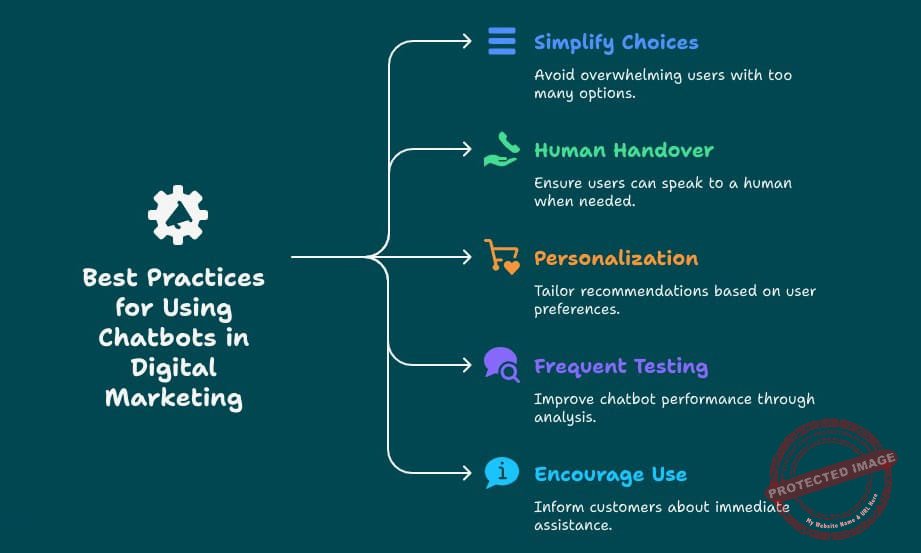
- Keep it Simple: Avoid overwhelming users with too many options.
- Enable human handover: Always offer the option to connect with a real person.
- Personalize Interactions: Save preferences and suggest relevant products.
- Test Regularly: Analyze conversations to improve chatbot performance.
- Promote Chatbot Use: Let customers know they can get instant assistance.
The Future of Digital Marketing Chatbots
The future of digital marketing chatbots looks promising. As AI advances, chatbots will become smarter, offering predictive recommendations, emotional tone detection, and deeper personalization.
Early adopters will gain an edge, as customers increasingly expect instant, interactive communication.
As a Marketing Consultant: Driving Growth with AI & Chatbots
With 15+ years of experience I combine AI-driven chatbots with advanced SEO strategies to deliver smarter, faster, and results-focused customer interactions.
- Engage customers 24/7 through intelligent chatbots
- Capture more leads with personalized conversations
- Lower bounce rates and improve search rankings
- Optimize for AI-powered search engines
- Increase conversions with real-time assistance
As a digital marketing consultant I can drive growth with AI chatbots by automating customer interactions, generating qualified leads, and offering personalized recommendations 24/7. Chatbots enhance engagement through instant responses, improve conversion rates by guiding users through the sales funnel, and collect valuable data to refine marketing strategies. By integrating AI chatbots across websites and social platforms, consultants ensure seamless communication, higher customer satisfaction, and measurable business growth through smarter, data-driven digital experiences.